Network Cabling Company Gardena CA | Specialists

From busy offices and medical practices to warehouses, distribution centers, and manufacturing floors, Gardena businesses need networks that keep up with demanding daily operations. We design, install, and certify structured cabling that connects every workstation, scanner, access point, camera, and machine reliably.

Network Cabling Company Gardena CA for Commercial and Industrial Properties

Gardena is a city in the South Bay region of Los Angeles County, incorporated in 1930 and covering roughly 5.9 square miles. It is bordered by Hawthorne, Torrance, Alondra Park, and the Harbor Gateway area of Los Angeles, and it is home to a diverse mix of retail centers, restaurants, medical offices, auto businesses, light-industrial facilities, warehouses, and manufacturing companies. That variety means the network needs of one Gardena business can look very different from the next.

As a network cabling company Gardena CA businesses can rely on, we build cabling systems around the way each facility actually operates. An office may need clean data drops for workstations, phones, and conference rooms. A clinic may need secure, dependable connections for records and imaging equipment. A warehouse may need long cable runs, high-mounted wireless access points, and cameras across loading docks and parking areas. A production floor may need cabling that stands up to vibration, dust, and electrical interference from heavy equipment.

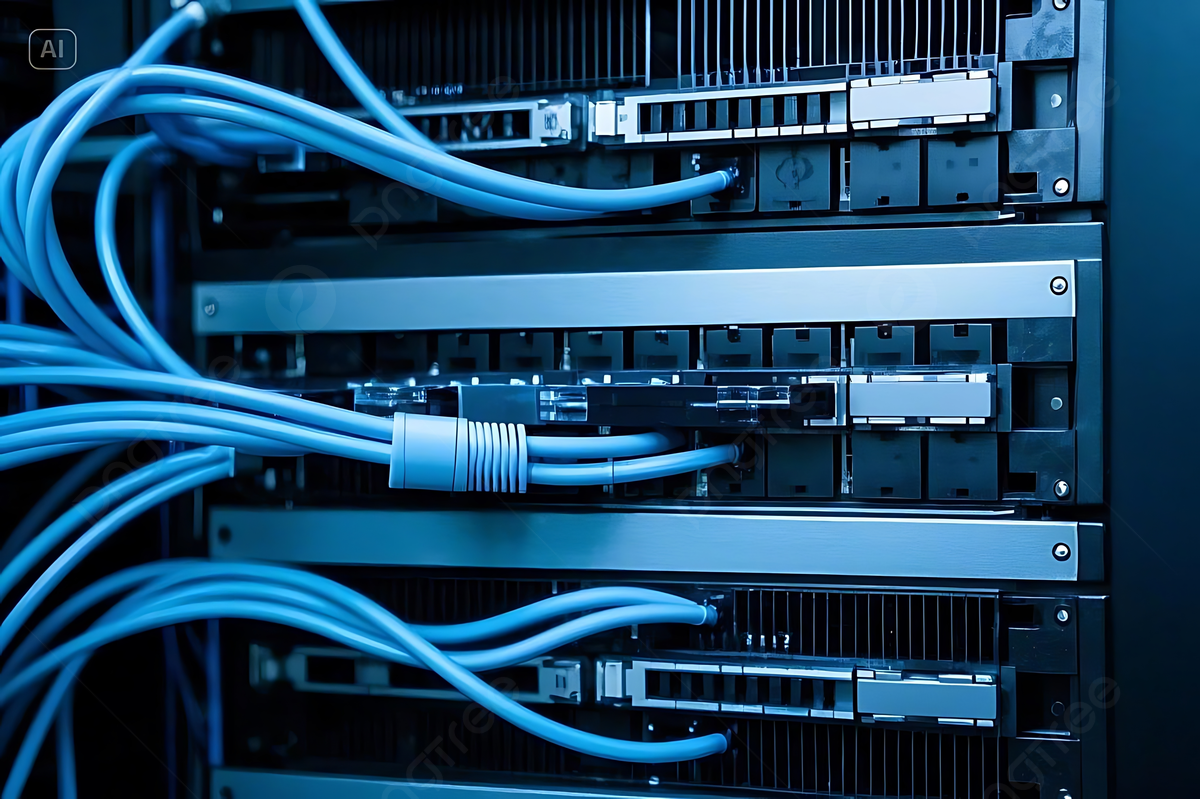
Our structured cabling services bring order to all of these environments. We plan pathways, select the right cable for each application, install and terminate every run to industry standards, organize racks and telecommunications rooms, and certify performance before handoff. That approach gives your IT department or outside information services provider a network that is simple to support, troubleshoot, and expand.

As California digital operations continue to grow, businesses across the West Coast depend on cloud software, inventory and fleet apps, VoIP, and remote video monitoring more than ever. Properly designed cabling helps you add new technology without costly rework and protects your investment for years to come.

Supporting Businesses Across the Freeway City

Gardena is often called the “Freeway City” because of its location near the Harbor Freeway (I-110), the San Diego Freeway (I-405), and the Artesia Freeway (SR-91). That access has made the city a practical home for logistics, distribution, and industrial companies that serve the Port of Los Angeles, the Port of Long Beach, and the greater Los Angeles region. The city also operates its own public bus system, GTrans, reflecting its role as an important transit and commuter hub in the South Bay.

Commercial activity stretches along major corridors such as Western Avenue, Crenshaw Boulevard, Vermont Avenue, Normandie Avenue, Rosecrans Avenue, Redondo Beach Boulevard, Artesia Boulevard, and Gardena Boulevard. Retail centers, restaurants, and professional offices line many of these streets, while industrial parks, warehouses, and manufacturing facilities are concentrated in several parts of the city. Some businesses, including gaming and hospitality venues, operate around the clock, which makes network reliability and careful installation scheduling essential. Many Gardena properties are older buildings that have been expanded or repurposed over the years. Existing cabling may be undocumented, outdated, or scattered across multiple equipment locations. A professional site survey identifies what can be reused, what should be replaced, and how the network should be organized for the next stage of your business

Network Cabling Services in Gardena

We provide a complete range of low-voltage cabling services for Gardena properties of every size. Each project is scoped around your facility, devices, workflow, and plans for growth.

Structured Cabling for Offices and Medical Facilities

We install Cat6 and Cat6A data drops for workstations, printers, VoIP phones, conference rooms, and exam rooms, terminating each run on labeled patch panels in an organized rack. Clean documentation and consistent labeling make moves, adds, and changes fast and simple.

Warehouse and Distribution Center Cabling

Large warehouses require careful planning. We run cabling to high-mounted wireless access points for handheld scanners and mobile devices, install drops for packing and shipping stations, and connect cameras covering aisles, docks, and yards. Cable is supported on J-hooks, cable tray, or other approved pathways at height, and work is performed using lifts where ceilings require it.

Manufacturing and Industrial Network Cabling

Production environments bring vibration, dust, heat, and electrical noise from motors and machinery. We route cable away from interference sources, maintain proper separation from power lines, and use fiber optic or shielded cabling where conditions call for it. Industrial-rated connectors and protective pathways help keep equipment connections stable on the plant floor.

Fiber Optic Backbone Installation

Fiber optic cabling connects main and intermediate equipment rooms, separate buildings, and distant areas of large facilities. It supports far longer distances and more bandwidth than copper and is immune to electromagnetic interference, making it the preferred backbone for warehouses, campuses, and industrial properties.

Wi-Fi, Security Camera and Access Control Cabling

We cable wireless access points, IP security cameras, access control readers, intercoms, and gate systems using Power over Ethernet (PoE) where possible, so a single cable delivers both data and power. Exterior runs use outdoor-rated cable and weatherproof connections.

Recabling, Cleanup and Network Upgrades

When racks are tangled, labels are missing, or older Cat5e cabling can no longer keep up, we clean up and reorganize your equipment, remove abandoned cable where required, and replace outdated runs with Cat6 or Cat6A to support faster speeds and newer devices.

Designing Networks for Large and Complex Spaces

The biggest challenge in many Gardena facilities is size. A standard copper Ethernet channel is limited to 100 meters (about 328 feet), including patch cords. In a large warehouse or multi-building property, many devices sit well beyond that distance from the main equipment room. The solution is to add one or more intermediate distribution frames (IDFs), which are secondary network locations connected back to the main distribution frame (MDF) with fiber optic cabling. Copper then runs a shorter distance from each IDF to the nearby devices.

Ceiling height and building construction also shape the design. Warehouses with open ceilings need approved cable support at height and careful placement of access points for coverage across tall racking. In offices, cable installed in air-handling spaces above drop ceilings may need to be plenum-rated to meet code. In older buildings, existing conduit and pathways may be full or damaged, requiring new routes.

Future growth should be part of the plan from the beginning. Adding spare ports, pathway capacity, and fiber strands during the initial project costs far less than making improvements after operations are running. A well-planned design also makes it easy to fix problems quickly, since every cable is labeled and documented from end to end.

Key Planning Factors for Gardena Facilities

  • Keep every copper run within the 100-meter channel limit, adding IDFs where needed.
  • Connect distant equipment rooms and separate buildings with fiber optic backbone cabling.
  • Support cable properly at height using J-hooks, cable tray, or other approved pathways.
  • Use plenum-rated cable in air-handling spaces where required by code.
  • Separate data cabling from power lines and machinery to reduce interference.
  • Plan wireless access point locations around racking, walls, and ceiling height.
  • Build in spare ports and fiber strands for future expansion.

Cable Types and Where They Fit

Choosing the right cable ensures each connection performs as expected. Cat6 is a dependable, cost-effective choice for most workstations, phones, and printers, supporting Gigabit Ethernet across the full 100-meter channel. Cat6A supports 10 Gigabit Ethernet over the full 100 meters and handles higher-power PoE devices more effectively, which makes it a strong choice for Wi-Fi access points, PTZ cameras, and new installations. Fiber optic cabling handles backbone connections, long distances, and areas with high electrical interference.

Gardena Cabling Applications at a Glance

ApplicationRecommended CableWhy It Fits
Office workstations, printers, and VoIP phonesCat6 or Cat6AReliable wired connections within the 100-meter channel limit.
Warehouse Wi-Fi access pointsCat6ASupports high-performance access points and higher-power PoE at height.
Packing, shipping, and receiving stationsCat6Dedicated drops for computers, label printers, and scanners.
Security cameras and access controlCat6 or Cat6A (outdoor-rated for exterior runs)Delivers data and PoE power to cameras, readers, and gates.
Production floor equipmentFiber optic or shielded copperResists electrical interference from motors and machinery.
MDF to IDF and building-to-building linksFiber opticHigh bandwidth over long distances without copper distance limits.

From Site Survey to Certified Handoff

Every project follows a clear, organized process. It starts with a site survey to review your facility’s layout, ceiling heights, existing cabling, equipment rooms, internet service entry point, and the devices that need connections. After that meeting, you receive a written proposal outlining cable types, drop counts, IDF and rack locations, testing, and documentation. Some providers offer free design with a quote, while others bill separately for design services; we make sure you know exactly what is included before you approve the project.

Installation is scheduled around your operations, whether that means after-hours work in an office, phased work across warehouse zones, or coordination with shift changes on a production floor. Our technicians route and support cable along planned pathways, terminate each run, dress racks with cable management, and label every connection.

Testing confirms the quality of the work. Every copper link is certified against the applicable TIA performance standard, and every fiber link is tested for optical loss. Any failed link is corrected and retested before the project is closed out, so your network is ready to use from day one.

Project Closeout Deliverables

  • Certified test results for every copper link and loss results for every fiber link.
  • A labeled port schedule matching each outlet, patch panel, and rack position.
  • Cable maps or marked floor plans showing routes, IDFs, and outlet locations.
  • Organized racks and telecommunications rooms with clean cable management.
  • A final walkthrough with your facility manager or IT provider.
  • Warranty information and a direct contact for future service.


Frequently Asked Questions

Location

Proudly serving Torrance, CA with reliable network cabling and connectivity solutions for businesses.